Introduction
India is the Global Leader in milk production. It is the largest producer of milk, contributing about 23% of total global milk production. The country also possesses the world’s largest size of livestock herds.
Dairy farming has the biggest impact on India’s agricultural economy. This sector has transformed the nation from a milk-deficient country to the world’s largest milk producer. The growth has largely driven by small and marginal farmers.
The dairy sector forms an essential part of the agricultural economy, contributing 9% of the total agricultural produce and offering livelihood to about 80% of the total farmers in the farming community of India.
Dairy farming is not just about milk production. It is a powerful tool for rural employment specifically for the rural women. In India, rural women play a crucial role in livestock management. They feed, care, and look after the animals every single day. Yet, their work often goes unnoticed. But through dairy farming, they can earn their own income. They can make decisions, support their families, and build confidence.
Dairy farming opens the door for women to education, healthcare, and a better future. It is more than a livelihood; it is a path to dignity and independence for rural women.
This blog explores how dairy farming transforms the lives of rural women. It shows how a simple cow can become a source of strength, independence, and hope for entire families. We will see how these women are building a brighter future. How dairy empowers women socially by giving them financial independence and recognition among their communities.
Historical Background: Women and Dairying in India
Dairy farming in India is a very old tradition. It is deeply rooted in the rural way of life for centuries. We have seen the description of dairy farming in our Purans. The king and sages were having their own dairy farms to cater their need of milk and milk products.
Women have kept India’s dairying alive for centuries. Mythological accounts reveal that women were not only caretakers of cattle but also skilled in the art of milking, curdling, and preparing ghee and butter. Yashoda, the foster mother of Lord Krishna, along with the Gopis (village women), were actively engaged in dairy farming—milking cows, churning butter, and managing milk products as part of their daily routine.
Women have always been central to cattle care. Historically, they managed most tasks related to livestock. They feed animals, milk the cow and buffalo, clean the animal shed, produce milk products like curd, butter, ghee for their domestic need as well as to sale in the local village market. Much of this labour stayed invisible. But it enables to sustain village life and food security.
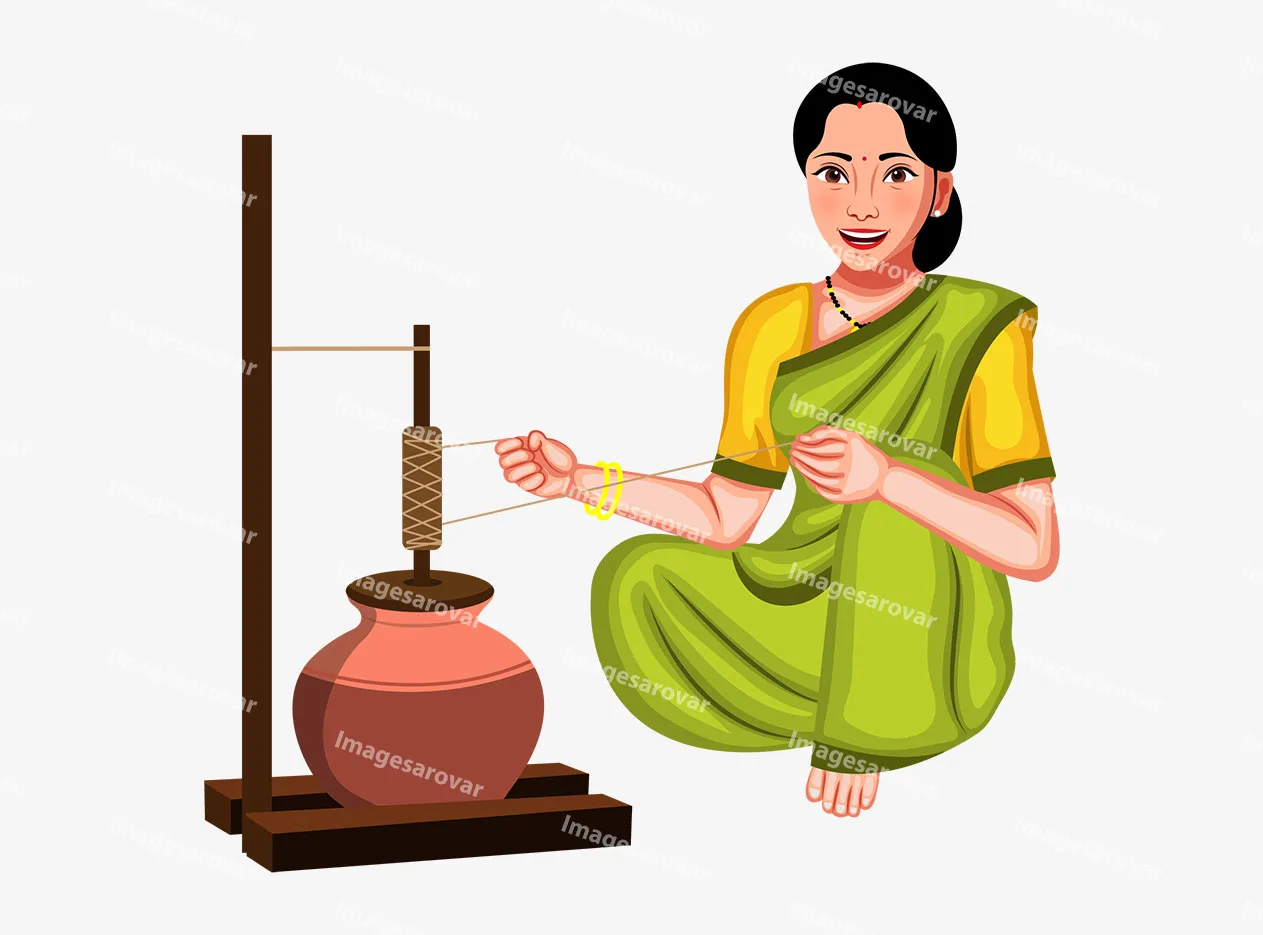
This tradition continued through the ages, with women across India remaining the backbone of the dairy sector, preserving age-old practices and knowledge that still influence rural dairy enterprises today. The traditional method used in earlier in those days is now well known as Bilona method of making ghee which is in high demand in the market.
For a long time, their hard work was not seen as a formal job. It was just considered an extension of household chores.
A modern chapter began in 1946. Farmers in Kaira, Gujarat formed the Kaira District Co-operative Milk Producers’ Union. We know it today as AMUL Men often held formal roles. Yet women did the daily care work. This model later spread across India.
India lunch Operation Flood in 1970 which is called as “White Revolution” that linked village milk societies to city market. This raised milk output and farmer income.
In the process women’s dairy cooperative societies began to form. It started with small numbers but the momentum built over 1980s and 1990s. Women’s role became more visible. Membership of women in cooperatives kept rising.
Government and NGOs also backed women’s producer groups. Women-only dairy societies were promoted. Training and credit reached women directly. Self-Help Groups (SHGs) add another layer.
Today the scale is massive. Women are now central to growth of milk production in India. Roughly 70% of the dairy farm workforce are women. About 35% of cooperative participants are women. Women-led dairy cooperative societies now number over 48,000 at village level. In 2023–24, women members in dairy cooperatives were about 5.41 million. The share is rising with new societies and federations.
Now women have become from unpaid labor to paid producers, to members and leaders of their own dairy societies. This journey shaped rural incomes and shaped India’s milk economy too.
Women’s Role in Dairy Cooperatives
Women in rural areas are playing a vital and increasingly important role in dairy cooperative movement. They are not just helping with tasks; they are leading change in rural communities. This section explores how they contribute, why their participation matters, and what that means for empowerment.
Dairy cooperatives, like those under the AMUL model, have plays important role in integrating women into the formal dairy economy. These cooperatives are member-owned and operated, ensuring that the benefits of the dairy business are shared equitably. Women are not just producers but also active members, often holding leadership positions. This participation gives them a platform to make decisions, influence policies, and advocate for their own needs and those of their families. They learn about quality control, fair pricing, and collective bargaining, which are crucial skills for empowerment
Below are a few roles and responsibilities carried out by women members associated with the dairy cooperatives.
- Women take care of daily animal feeding, cleaning, and milking.
- They ensure proper hygiene while handling milk and equipment.
- They are responsible for timely delivery of milk to the cooperative collection center.
- They maintain basic records such as milk quantity, quality, and feeding schedules.
- Women attend cooperative meetings and share their views on dairy-related issues.
- They participate in training on animal health, nutrition, and farm management.
- Many women manage household budgeting using income earned from milk sales.
- They help in forming Self-Help Groups (SHGs) linked to dairy cooperatives.
- Women leaders oversee cooperative activities and decision-making.
- They promote best practices like clean milk production and proper fodder management.
- Women support other members by sharing knowledge and motivating participation.
- They play a key role in identifying animal health issues and calling veterinarians.
Through their support, guidance, and knowledge sharing, they encourage other women in the community to participate and grow in the dairy sector. This active involvement strengthens the cooperative and empowers rural women in a meaningful way.
Economic Empowerment through Dairy
Dairy farming provides women with a direct source of income, which is a key driver of economic empowerment. Further dairy cooperatives are a powerful source of economic empowerment for rural women, turning their essential work into a recognized and rewarding enterprise.
The consistent sale of milk gives them a steady cash flow, unlike seasonal agricultural work. The income from milk often paid straight to their bank accounts. This helps in controlling personal income significantly boosts their financial independence. This income allows them to make their own financial decisions, such as paying for their children’s education, buying household necessities, or investing in more livestock.
Further direct bank payments for milk sales establish a formal financial history for women in dairy cooperatives, which is important for accessing credit. The cooperatives actively facilitate this by arranging tripartite agreements with banks, helping members secure loans for buying cattle or equipment. This mechanism provides access to substantial credit that these rural women would likely not have been able to secure on their own, thereby accelerating their economic growth and investment in their dairy enterprise.
A recent data from a major dairy cooperative in Gujarat shows that women-led milk societies collectively recorded an annual income exceeding ₹9,000 crore (approximately $1.1 billion USD) by 2025, demonstrating massive financial growth and a clear path from labor to economic leadership.
A survey in the year 2020 at the Nadia district of West Bengal highlights the deep involvement of women in dairy cooperatives. Financially, the dairy work provides a key income stream for member households. The majority of households surveyed earn between ₹3,000 to ₹5,000 monthly These facts, documented by RSIS International, underscore the vital contribution of dairy farming to both the daily labor and the economic stability of rural women in the region.
Prem Bai a member of Bhilwara Milk Union from Rajasthan, an uneducated and without formal employment, became a breadwinner and bought 25 acres of land through dairy income.
There are many such stories and data available in the web. It established one fact that this financial independence boosts confidence and status of women dairy entrepreneurs within the family and community.
Social and Cultural Impact
Dairy farming has brought a big social and cultural change in rural India. It provides women a visible role in the economy as well as in their community. This helps them to step out of their homes and become leaders.
Dairy farming is much more than just a business. It changes how people think and behave in rural villages. This work helps rural women gain respect and a stronger voice in their community.
Many women operate small dairy units, earning income, confidence, and decision-making power. This financial independence has improved their stakes in household matters. They are now involved in decision making like spending on children education, food, and healthcare.
Women managing milk collection centers and serving on cooperative committees, gain respect and leadership within the community, inspiring youngers to dream bigger.
Dairy farming also enables women to savings and credit, which enhance their financial and social status. Studies show that when women actively participate in family decisions, families experience better nutrition and improve in children’s well-beings.
FAO observed a reduction in gender gap in agrifood work which results in increase in global GDP by 1% and reduces food insecurity for 45 million peoples. This is a reflection of how women are empowered and benefited with this.
Daily interactions at milk collection centers, various training sessions are slowly breaking social barriers, normalizing women’s voices in public spaces. Their involvement in cooperative meetings and different programs increases their visibility and social network. This leads to greater gender equity and shifts perceptions about women’s capabilities.
Even in the face of climate change, women in dairy have shown resilience, helping families adapt to income losses from heat and floods. In essence, dairy farming is more than a source of milk, it is a force of dignity, empowerment, and lasting social change for rural women and their communities.
In summary dairy is more than milk. It is a platform for dignity, leadership, and change. It helps women earn, decide, and be heard. Women who were once confined to household works are now respected as contributors to their family income.
Challenges Faced by Women in Dairy
Despite all above progresses, women in the dairy sector still face significant challenges. These challenges keep they away from all the benefits they supposed to get or they really deserve. The major hurdles are,
Limited Access to Key Resources
Women often struggle to get the resources they need for better farming. Many times, it is seen that land and animal ownership belongs to male member of the family. But bank always ask for collateral mortgage like land or assets as security for loan. Hence it becomes difficult for a woman to get loan from bank. This means they do not have full control on dairy farming.
Unequal Control Over Income and Decisions
Even though women do most of the work, they often don’t have full control over the money earned. Money from milk sales goes to women account so she managed daily household needs, but money from sale of animal goes to men. That’s why men usually make the big decisions like selling the main animals or investing in new technology.
Heavy Workload and Lack of Time
Women handle many works at home. They also care for animals every day. This creates long days and little rest. In India, women spend about 5 to6 hours a day family care work. This allows women with less time for training, markets, or paid work.
Low Voice in Producer Groups
Women do much of the dairy work. But many do not sit where decisions are made. Most of the time the group decisions are influenced by the male members as they are more in number.
Training, Vet Care, and Extension Gaps
Women often miss training sessions due to time clash with their regular family work. There are very few frontline staff are women. So, women get less knowledge, less advice and fewer services. Studies show extension often benefits men more when programs ignore women’s time and needs.
Lack of Mechanization
Many households have 2-3 animals and they cannot afford mechanization for milking, cleaning sheds, and fodder chopping etc. But doing these work manually are tiring. Also, tools are heavy and designed for men. This causes fatigue and injuries when used by women. Simple, women-friendly tools are still rare need to be developed.
Market Access and Mobility Barriers
Women find difficulty to travel to nearby market to sell less quantity of milk on their own. Travel is difficult due to safety and time limits. They depend on male member or middlemen. This reduces their bargaining power and income.
Digital and Data Gaps
Phones and internet help farmers to learn new thing. But many women do not have smartphones or data plans. This keeps them out of online payments, advisories, and market prices. Programs must be designed for digital access easily at affordable cost.
Dairy farming gives women a path to empowerment. But, overcoming these deep-rooted challenges is key to fully realizing their potential and making their work more rewarding.
Government and Institutional Support
Governments and various institutions have recognized the potential of dairy farming for women’s empowerment and have launched several initiatives.
The Department of Animal Husbandry and Dairying runs national programmes. The National Programme for Dairy Development (NPDD) supports milk quality and organised milk procurement. This programme gives funds to improve village milk collection and cold chains.
Schemes like the Rashtriya Gokul Mission and the National Livestock Mission provide subsidies for buying livestock, veterinary services, and quality fodder. Organizations like the NDDB and NABARD offer training programs on animal health, hygiene, and business management. These programs are specifically designed to be accessible to women, helping them overcome some of the challenges they face.
Under schemes like the Prime Minister’s Employment Generation Programme (PMEGP), women get a higher subsidy. They get subsidy for setting up micro-enterprises, which is more than the standard rate. This makes it easier for them to start.
Self-Help Groups (SHGs) play a key role. About 87.8% of SHGs are women’s groups. SHGs help women get small loans, start dairy micro-enterprises, and save regularly. Many states missions link SHGs to dairy value chains and market access.
White Revolution 2.0 (launched 2025) targets a 50% increase in milk procurement by 2028–29, and creation of 75,000 new Dairy Cooperative Societies with focus on women’s inclusion. Schemes like SWAYAM SHAKTI SAHAKAR, NANDINI SAHAKAR, and YUVA SAHAKAR support credit access, training, and entrepreneurship for women.
International bodies and NGOs also support women. Programs focus on resilience, climate adaptation, and asset building. Pilot projects report higher savings and better assets among women members. These programs often work with cooperatives, SHGs and government schemes.
The combined support is practical and measurable. More women now own livestock. More women lead local dairy societies. More women earn from milk sales and from dairy value addition. These gains improve family nutrition and children’s wellbeing.
Conclusion
Dairy farming offers a powerful path for rural women’s empowerment. Dairy farming is much more than a livelihood; it’s a vehicle for social change. It is much more than just a business. It is a path to a better life for many women.
It has empowered millions of rural women in India by giving them a voice, an income, and a sense of ownership. Dairy farming empowers rural women economically and socially, helping them become decision-makers, entrepreneurs, and leaders in their communities.
Dairy work helps women learn skills in animal care, management, and business. These skills make them more confident and able to take on new challenges.
With supportive policies, training, infrastructure, and digital tools, the sector will encourage more women to join cooperatives, access markets, and shape rural development.
” Empowering women through dairy is not just about milk—it’s about nurturing livelihoods and building communities.”
Note: The writer of this blog is the author of the book “OMC of BMC“, a book on Operation, Maintenance and Cleaning of Bulk Milk Cooler, The book is now aviable in all major platforms.