
Introduction
Village Level Milk Collection Centers are the backbone of Indian Dairy ecosystem. These are the places where small and marginal farmers bring their surplus milk every day. Sometimes just a litre or two from each household of the village and together these small amounts become the supply for towns and cities. The farmers get paid for their milk based on the test conducted in the VLCCs. Many times, the amount deposited to the farmer’s bank account directly.
In India mostly dairying is done by smallholders, hence these VLCCs links millions of rural families for a steady cash income, jobs and local economic activities. India’s cooperative dairies now cover roughly 2.3 lakh villages and connect about 1.7–1.8 crore farmers members. This shows how village level milk collection is widespread in India.
VLCCs also take up various activities such as providing animal feed in a subsidised rate, vaccinations for animals, veterinary services, training to farms on raring animals, artificial insemination at much cheaper price etc to help farms to grow thus getting more milk and more income.
Despite its importance, running a VLCC is always challenging. Many struggles with the following three major challenges.
- Low Prices: farmers often get low returns compared with the final retail price.
- High Wastage: lack of chilling, poor handling, and transportation delays cause milk spoilage.
- Poor Efficiency: manual weighing, slow payments, weak testing, and irregular collection reduce trust and raise costs.
Small improvements at the collection centre — better weighing and testing, quicker payments, basic chilling, daily records, and simple scheduling — can cut losses and lift profits significantly.
In this blog, we will explore practical, ground-level strategies to transform traditional milk collection into a more profitable and sustainable operation.
Why to Make VLCCs Efficient
Village Level Collection Centers (VLCCs) are the links between farmers and the dairy processing plants. Large dairies and cooperatives are expanding VLCC networks understanding the importance of village milk collection.
Studies and field reports find post-harvest milk losses such as handling, spoilage, curdling etc. can range from 2–8% in problematic areas. Erratic power and lack of cooling infrastructures are often large contributors. Reducing these losses will raise the farmer’s income and processor margins.
Making village-level milk collection centers (VLCCs) efficient is one of the fastest, simplest ways to raise incomes for small farmers, reduce waste, and improve milk quality for everyone. India produces over 239.30 million tons of milk a year, so even small percentage savings at VLCCs add up to large value for farmers and processors.
VLCC represents the entire dairy system for many of the farmers. It is the place where their daily hard work is measured, evaluated and converted to real income. If at any point of time the farmers face issues such as incorrect payments, delays in milk acceptance, or a lack of transparency in quality testing, they begin to feel uncertain and dissatisfied. Over time, these repeated experiences create doubt about fairness and accuracy, making farmers feel that their milk is not being valued properly. As trust reduces, many farmers start looking for alternatives, such as selling milk to private vendors, reducing the quantity of milk they supply to the VLCC, or losing motivation to invest in better feeding, animal health, and productivity improvements.
An efficient VLCC, on the other hand, ensures timely milk acceptance, accurate testing, and clear, transparent payments. This builds confidence among farmers, strengthens their relationship with the dairy organization, and encourages them to consistently supply good-quality milk. Such trust and loyalty are essential for long-term, sustainable growth of village milk collection.
In this subsequent section we will discuss how to transform a simple collection point into a highly efficient and profitable business that benefits both the centre owner and farmers.
Ways to Make VLCCs Efficient for Sustainability and Profit
Village Level Collection Centers (VLCCs) are the backbone of the rural dairy economy. When a VLCC works efficiently, farmers earn more, processors get better-quality milk, and the entire supply chain becomes sustainable.
Small Changes brings Big Profits. We do not need a massive effort to make the VLCC more efficient. Simply by making smart and small improvements in how we test, store, manage our milk and reduce losses will have greater impact on the efficiency of VLCC and boost the margins.
Efficiency at VLCCs mainly depends on two factors
- Reducing Waste
- Increasing Accuracy
- Optimise operational issues
Let us discuss few simple and practical ways how to make the VLCCs more efficient and profitable.
01. Reducing Waste
Reducing Waste is stop losing milk and in turns Money. Waste does not always mean spilled milk. It also includes quality loss, time loss, and energy loss. These steps reduce milk spoilage and make the VLCC more efficient and generates profits.
a) Prevent Milk Spoilage
Milk is highly perishable item and more sensitive to ambient temperature as well environment. When milk is not cooled within a specified time and hygiene in milk collection centre is poor the quality of milk decorates quickly.
- Start Cooling of milk as soon as it is collected.
- Maintain clean cans, pipelines, and testing equipment
- Ensure proper washing with hot water and food-grade chemicals
- In case cooling facility is not available, collect milk early in the morning and send to nearest chilling centres soon.
Results: Less rejection, better quality bonus, and higher trust from dairies.
b) Reduce Transfer and Handling Losses
Manual handling leads to spillage and contamination. More we transfer to multiple container there will be more losses and more contamination leads to affect the quality of milk.
- Use proper funnels and closed pipelines
- Avoid unnecessary transfers between containers
- Train staff in careful milk handling
Result: Every drop saved directly adds to profit.
c) Check at Energy and Water Usage
Energy and Water come with some cost. Unnecessary usage of water and energy rises the bill which impacts on operating cost hence on overall profit of the VLCC.
- Use energy-efficient Bulk Milk Coolers
- Fix water leakages and follow standard cleaning cycles
- Switch off equipment when not in use
Result: Lower operating cost and better sustainability.
02. Increasing Accuracy
Accuracy builds farmer confidence and financial discipline at VLCCs. This reminds the saying “Pay Right, Earn Right”. Accuracy and transparency in weights, quality testing, payments in time brings confidence among farmers and builds long-term farmer loyalty, which is essential for sustainable milk collection growth.
a) Accurate Weighing of Milk
A small weighing errors can lead to disputes. Farmer lose faith on the collection centre.
- Regularly calibrate weighing scales
- Place weighing equipment on level ground
- Avoid manual estimation
Result: Fair payment and zero arguments with farmers.
b) Correct Testing of Fat and SNF
Incorrect testing affects milk value and farmer morale. FAT & SNF is the basis of payment to farmers. Malfunctioning of milk analyser make injustice to farmers with good quality of milk,
- Use well-maintained milk analysers
- Calibrate machines as per schedule
- Follow standard sampling methods
Result: Farmers feel rewarded for quality, and better milk flows to the VLCC.
c) Digital Records Instead of Manual Registers
Maintaining proper records of milk collection is essential for fare payment to the farmers. When these data are maintained digitally it looks clear to every stakeholder.
- Manual entries often lead to mistakes and delays.
- Use digital milk collection systems
- Issue instant receipts to farmers
- Maintain daily reports automatically
Result: Transparent transactions and faster decision-making.
03. Optimise Operational Issue
Optimising operational issues means improving the way daily activities are carried out at the Village Level Collection Centre (VLCC). These improvements focus on better methods and discipline, not on spending more money.
When operations are well-managed, the VLCC runs smoothly every day. The key benefit is that these improvements do not increase costs. In fact, they help reduce losses, avoid errors, and save time. Farmers feel more confident when processes are transparent and consistent, which directly improves their satisfaction and trust in the VLCC.
a) Standardize Timing & Shift Plan
Fixing the collection schedule and communicating it clearly makes life easier for everyone.
- Fix milk collection timings and strictly follow them
- Display collection timings clearly at the centre
- Set different timings for summer and winter, considering weather conditions
- Ensure staff and equipment are ready before the actual collection time
Result: Milk collection becomes smooth, disciplined, and predictable
b) Community Engagement & Feedback
A milk collection center works best when farmers feel it belongs to them. Engagement creates trust, ownership, and long-term commitment.
- Conduct short and simple training sessions on milk hygiene and handling
- Ask farmers for feedback on collection procedures and timings
- Form a small core group of active farmers to support decision-making
Result: A strong sense of responsibility and belonging develops among milk-pouring members.
c) Reward for Premium Quality Milk
Quality should always be encouraged. When farmers see a clear benefit for better milk quality, they naturally improve animal care and feeding practices.
- Reward farmers producing best FAT and SNF milk
- Give additional bonus for consistently high FAT & SNF values
- Recognize and reward the best animal among the farmers
Result: Healthy competitiveness and continuous quality improvement among farmers.
In simple words, less waste + more accuracy = more profit.
When VLCCs run efficiently, they do not just collect milk, they create value for the entire village dairy ecosystem. Profit in village milk collection does not come from big changes alone. It comes from small improvements done consistently—less waste, better accuracy, and disciplined operations. When these basics are done right, profit follows naturally.
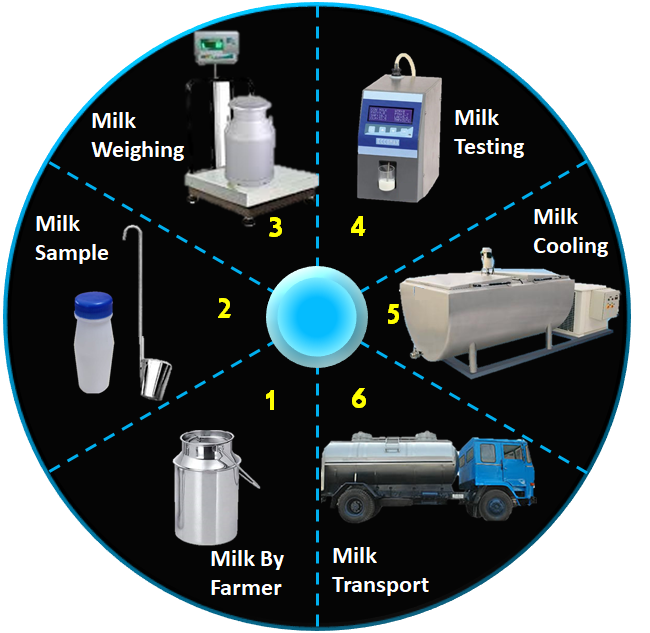
Practical Steps to Make VLCC More Profitable
Improving profitability at a Village Level Milk Collection Centre (VLCC) is a multifaceted challenge. A VLCC should not function only as a milk collection point, but as a professionally managed micro-enterprise. The following practical steps are proven measures that directly impact revenue to build long-term sustainability.
Earn More by Adding Value, Not Just Selling Raw Milk
- Explore small-scale processing like curd, paneer, ghee
- Try packaging milk for local markets
- Partner with local shops, hotels, and tea stalls
- Higher margins from value-added products
Improve Operations with Basic Technology
- Use mobile apps for milk recording
- Install simple sensors for hygiene and temperature
- Provide digital payment options
- Reduce paperwork and avoid manual mistakes
Build Market Connections for Better Prices
- Supply to multiple dairies to compare rates
- Explore bulk buyers like cafes, sweet shops, small industries
- Understand seasonal price trends
- Negotiate better contracts based on quality
Use Renewable Energy to Reduce Cost
- Small solar systems for milk chillers
- Reduce dependency on diesel generators
- Lower power bills = higher profit
Train and Maintain Discipline
- Basic training for staff on hygiene and testing
- Clear roles and responsibilities
- Daily cleaning checklists
- Consistent customer service for farmers and buyers
Collaborate with Nearby VLCCs and Grow Together
- Share resources like transportation & chilling to reduce costs.
- Combine milk volumes for better bargaining power
- Support each other during peak or lean periods
- Exchange best practices and local solutions
By focusing on these practical steps, a VLCC can move from just surviving to growing steadily—benefiting both the society and the farmers it serves.
Conclusion
Turning a Village Level Milk Collection Centre (VLCC) into a more profitable unit is not about one big change, but about doing many small things right every single day. Throughout this blog, we discussed how milk losses, poor handling, delayed chilling, improper cleaning, and minor operational mistakes silently reduce income at the VLCC. When these issues are monitored and controlled, the same quantity of milk can generate better returns without any extra investment.
We also saw the importance of discipline at the collection point—checking milk quality, starting chilling on time, maintaining correct temperature, and keeping records properly. Simple practices like avoiding spillage, ensuring power backup, cleaning the Bulk Milk Cooler correctly, and reporting faults early can prevent milk spoilage and equipment breakdowns. Collaboration with nearby VLCCs, sharing resources, and learning from each other further helps in reducing costs and improving efficiency.
To make this easier for VLCC in-charges and dairy staff, I have created a VLCC Efficiency Checklist that can be followed daily. This checklist converts all these best practices into clear, actionable steps, helping the in-charge focus on what really matters at the ground level. When followed consistently, it improves milk quality, builds farmer trust, and strengthens the overall performance of the VLCC.
In the end, a well-managed VLCC benefits everyone—the farmers get fair value for their milk, the dairy gets better quality, and the village moves towards sustainable growth. Small daily improvements, when done with commitment, lead to long-term profit and stability.